Spotify Music Distribution: The Complete Guide for Indian Artists (2026)
Everything an Indian artist needs to know about distributing music on Spotify in 2026 — getting verified, editorial pitching, the 7-day rule, Discovery Mode, Marquee, and royalty math.
Spotify is the single most important streaming platform for most independent artists worldwide — and for Indian artists, it has become essential for breaking out of regional audiences. This guide covers the full Spotify workflow from delivery to verification to editorial to monetization tools like Discovery Mode and Marquee.
How Spotify ingestion actually works
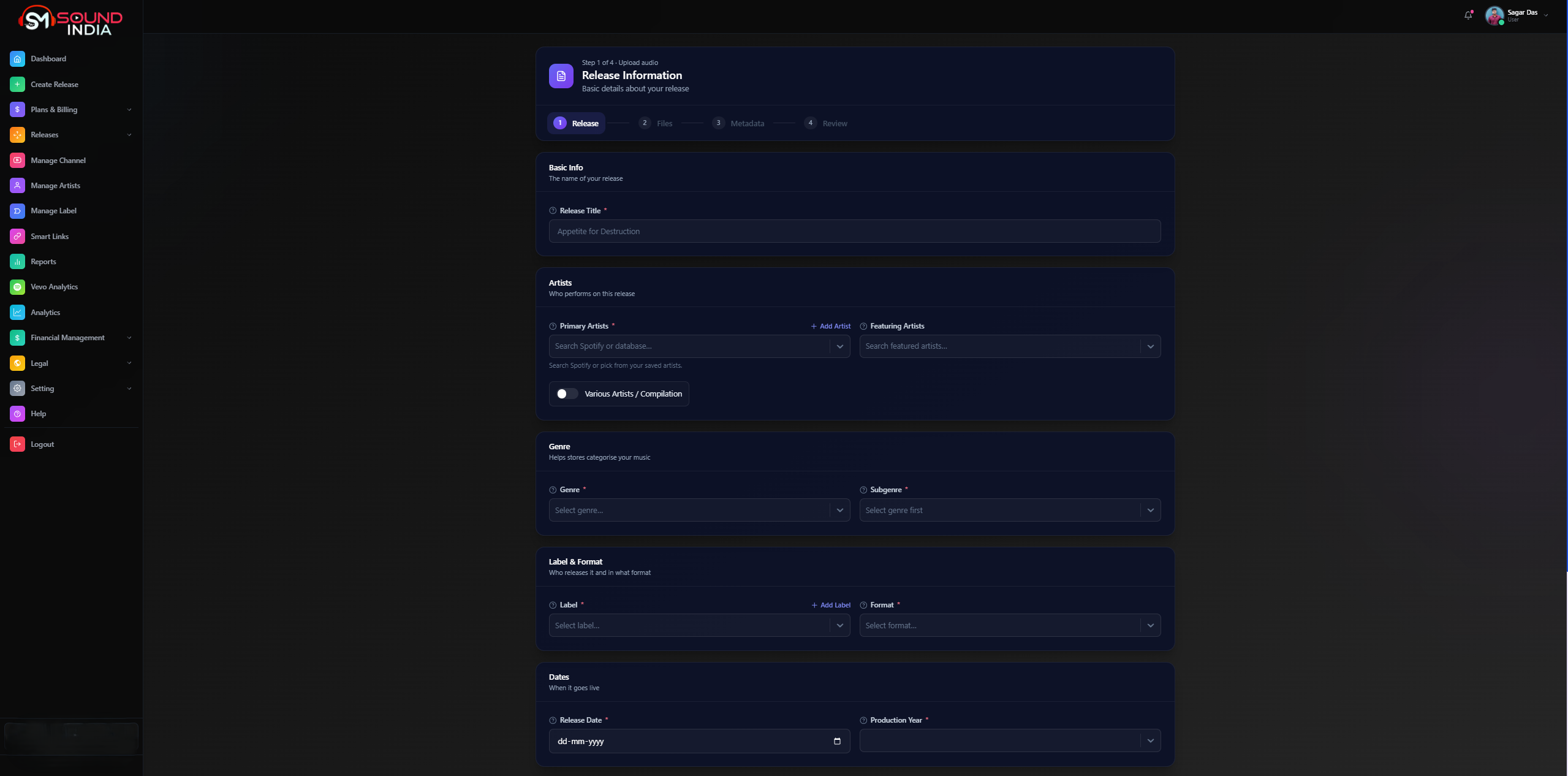
Spotify does not accept music directly from artists. Every track on the platform is delivered by a partnered distributor in DDEX (Digital Data Exchange) format. When you upload to SMSound India, we convert your master and metadata into the DDEX spec, deliver to Spotify's ingestion endpoint, and monitor the QC response. Most releases are accepted within 24–48 hours of submission.
The release goes live on the scheduled date in 180+ markets simultaneously. There is no way to release earlier in some markets and later in others — Spotify enforces a global release timestamp.
Spotify for Artists — what you actually get
Once your first release is live, you can claim your Spotify for Artists (S4A) profile. The verification process is fast: log in with your distributor email, prove the release is yours, and Spotify typically issues the blue check within a few business days.
Inside S4A:
- Real-time analytics: Streams, listeners, save rate, skip rate, completion rate, and city- level audience updated within minutes of going live.
- Editorial pitch tool: Submit upcoming singles to Spotify's editors up to 4 weeks ahead of release.
- Profile management: Upload artist image, write bio, link socials, pin a featured release, add concert dates via Songkick integration.
- Canvas + Clips: 8-second looping visuals and 30-second vertical Clips that boost save and share rates significantly.
- Discovery Mode & Marquee: Paid promotional tools, detailed below.
The 7-day rule for editorial pitching
Spotify's editorial team only considers releases pitched at least 7 days before release date. Pitches filed inside that window are not seen by editors — period.
A clean pitch includes: detailed genre + sub-genre + mood, instrumentation, language and cultural context, recording location, songwriter credits, and a short narrative about the release and the artist. Editors use these fields to filter their queues — accurate tagging is the single biggest controllable factor in your pitch landing.
For Indian artists specifically, language tagging is gold. The biggest editorial slots for indie releases are language-and-mood playlists like Hot Hits Hindi, Punjabi 101, Bengali Indie, Tamil Top, and similar. These playlists are curated by India-specific editors and they cannot place a track they cannot find in their language queue.
The first 24 hours — Release Radar and algorithmic playlists
Release Radar is Spotify's personalized weekly playlist of new releases from artists each listener has previously interacted with. Every existing listener-follower of yours gets your new release in their Release Radar automatically. This is your single biggest day-one audience.
What you do in the first 24 hours determines whether Spotify expands your reach beyond Release Radar into Discover Weekly and Daily Mix the following week:
- Saves: Each save tells the algorithm a listener wants to come back. Saves matter more than streams in the first 24 hours.
- Completion rate: A stream past 30 seconds counts as a real play. Strong intros that hold listeners past the 30-second mark dramatically improve algorithmic momentum.
- Skip rate: The metric Spotify cares about negatively. Skip rates above 30% on day one correlate with much lower algorithmic reach.
- Adds to user playlists: When listeners add your track to their own playlists, the algorithm reads it as a strong endorsement signal.
Discovery Mode — paid algorithmic promotion
Discovery Mode is Spotify's pay-with-royalties promotion tool. You opt-in tracks to receive boosted algorithmic reach in exchange for a 30% reduction in royalty rate on the streams generated through Discovery Mode placement.
It can be wildly effective for the right kind of track — typically "sticky" songs with strong save rates that just need more first-listens. It can also be wasteful for tracks with weak save metrics, since you are giving up 30% royalty for streams the algorithm would have suppressed anyway.
Most distributors expose Discovery Mode toggles in their dashboard. Test it on individual tracks before turning it on catalogue-wide.
Marquee — paid full-screen takeover
Marquee is Spotify's premium ad product — a full-screen, sponsored release recommendation that appears to listeners likely to enjoy your music. You pay per impression. India ad rates are significantly lower than US/UK rates, which makes Marquee disproportionately effective for India-focused releases.
Marquee usually delivers a 1.5–3x boost in first-week streams compared to organic release performance, with a clear save-rate advantage among targeted users. Best paired with a strong organic pre-save campaign and an editorial pitch.
Royalty math on Spotify in India
Spotify uses a pro-rata royalty pool: total monthly subscription + ad revenue is divided across total streams on the platform, then your share of streams determines your share of revenue. As of 2026, rough per-stream rates land around:
- Spotify Premium (paid tier): ₹0.20–0.30 per stream after distributor passthrough.
- Spotify Free (ad-supported tier): ₹0.05–0.10 per stream — much lower because ad revenue is lower than subscription ARPU.
These are pre-tax. SMSound India deducts applicable TDS (10% for resident artists above the threshold) and pays out in INR monthly. See the full breakdown in our music royalties in India guide.
Common Spotify mistakes that kill releases
- Pitching inside the 7-day window — editorial never sees the track.
- Multiple artist profiles caused by inconsistent artist name spelling on different releases. Get the spelling exactly right on the first release and never change it.
- Cover art with URLs, social handles, or logos — Spotify auto-rejects.
- Generic genre tagging (just "Pop") when the track could legitimately be "Hindi Indie Pop". Specificity helps editors find you.
- Missing songwriter credits — disqualifies you from sync licensing and certain editorial consideration.
Ready to release on Spotify? Start with our Spotify distribution overview and the step-by-step upload checklist.